Khalid Hasan in the Friday Times remembers Nargis, the great Indian actress of the 40's and 50's (full article behind Friday Times' subscription firewall). Khalid Hasan's reminiscenses about film, music, poetry and South Asian personalities and institutions are unfailingly interesting. In a culture where the genre of memoir is so impoverished, his articles are a worthy effort at preserving the memory of many
bhoole bisre log.
Some excerpts:
Sunil Dutt buried her, as she had willed, next to her mother Jaddan Bai in Bombay. Her grave bears the name she was given at birth: Kaniz Fatima. Her great friend in Bombay, Qurratulain Hyder, wrote to me after Nargis died: “Yes, Nargis has left us all immeasurably sad. She was a part of the time of our growing up, a time that is itself now mythological. Her old movies, when one watches them on television now, look quite amateurish, but how romantic they seemed then! She moved ahead in life with tremendous grace and dignity. And when she died, she died as a major national figure. She was a fascinating woman who had no hang-ups about her mother’s origins. In fact, the last time she met me, I recall her telling me that her mother was such an independent woman that once when the Nawab of Rampur, who was celebrating his birthday, asked her to dance on a takht-e-rawaan , a platform that moves with a ceremonial procession, she refused. She was a great admirer of her mother and it was her desire that she should lie next to her and among those who stood silently praying as she was being lowered to earth was Sunil Dutt.”
Sunil Dutt, who came from Jhelum, died last year.
Saadat Hasan Manto, recalling his meeting with Nargis in 1946, writes: “There was something very playful and innocent about her. She would blow her nose every few minutes as if she suffered from a permanent cold. This was captured in Barsaat as one of her endearing traits.” He also writes about the two younger sisters of his wife Safia, who while on a visit to Bombay, befriended Nargis. One of the sisters is Zakia, the late Hamid Jalal’s wife and Shahid and Ayesha Jalal’s mother. I asked Zakia Jalal some years ago what she remembered of Nargis. This is what she wrote back: “You have asked me about our meetings with Nargis. I can only tell you that when we saw her first picture Taqdeer, my sister Rafia and I just fell in love with her. The public reaction was that she would not make it to the top because of her looks. People said that she had a long face. Anyway, we sisters were dying to talk to her. We dared not ask Bhai Saadat to get her telephone number for us. We asked Agha Khalish Kaashmiri for it and he got it for us. We called her and we just clicked. We told her that it was difficult for us to visit her, so it would be nice if she could come. She agreed and the very next day, she came to Safia Apa’s house with her mother Jaddan Bai. There was nothing more exciting for us, but that very day, Bhai Saadat decided to come home early. We were terrified but he was very nice to Jaddan Bai and they got along very well.
 Yesterday I read Ian Buruma's excellent review of Clint Eastwood's new film "Letters from Iwo Jima" in the New York Review of Books. This film, in the Japanese language, has been widely praised by critics, winning the Golden Globe for "Best Foreign Language Film". The passage below in Buruma's review really caught my eye:
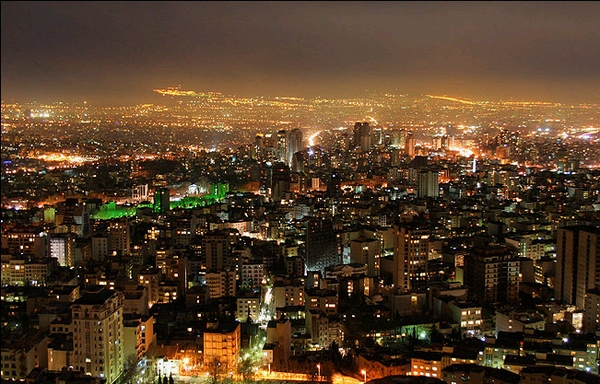 This reminded me of a recent e-mail I had received with a link to an old song by Cat Stevens (Yusuf Islam nowadays) called "Peacetrain". The song is in the background as images of modern day Tehran flash on the screen. These images of everyday life paint a portrait of a people not unlike 'us' as opposed to pictures of an implacably ugly and hostile enemy conjured up by political propaganda. How many people visualize Tehran and its people in this way when they speak of bombings and military action? The message is powerful and surprisingly effective in its simplicity because it subverts the very essence of propaganda, the inhumanity of the 'other'.

