On March 9th, the Chief Justice of Pakistan's Supreme Court, Justice Iftikhar Muhammad Chaudhry was summoned to that bastion of Pakistani democracy, the Army House, and suspended from office. This is another shameful episode in the long, sad story of Pakistan's first 60 years. Reading the newspapers it is clear that the civil society is unanimous in deploring this latest authoritarian powerplay by Pakistan's current self-styled savior. The way the hopes and dreams of the founding generation of the country have been dashed are enough to kill the spirit of the most optimistic amongst us. The dream of a Pakistan based on the rule of law is further today than it ever has been since its founding.
Anybody with a rudimentary knowledge of Pakistan's sordid khaki-dominated political history can be forgiven for not taking the official reasons seriously. Given that Musharraf has not shown the slightest regard in the past about the destruction of politial institutions or the probity of our judiciary there is not an iota of reason to believe that this was motivated by anything other than power consolidation. This is just a step in the preparation for rigged elections later in the year to keep Musharraf in power and uniform in perpetuity. In retrospect it is clear that Naeem Bukhari's letter widely circulated on the internet was a charade likely orchestarted by the agencies in preparation for this pre-meditated move. Whatever Justice Chaudhry's personal shortcomings it is indeed a fact that he has presided over several decisions that have embarassed the government including the high profile Steel Mills case. His probing in the disappearance of hundreds of Pakistanis into the lawless, Kafkaesque world of Pakistani military intelligence also likely did not endear him to Musharraf and his cronies (amongst them that crying shame of an enabler Prime Minister, Shaukat 'shortcut' Aziz). Going into a fraught political season Musharraf cannot take any chances. That this was orchestrated at a time when the next in seniority Justice Bhagwandas was out of the country provides more evidence of the government's real intentions.
I find Pakistan's current political scene, never encouraging, extremely depressing of late. Musharraf and the army's perpetual chokehold on the people, with intelligence agencies as instruments, has sapped the country of its vitality. Mainstream political parties are paralyzed and in complete disarray. The mullahs are more regressive than ever. Law and order is at an all time low. Pakistanis are likely to emerge from the Musharraf nightmare as a country institutionally more decimated than at any other time in its history. The people of this benighted land seem destined forever to be at the mercy of one tinpot uniformed dictator after another.
The best we can do is to continue to raise our voices for the rule of law and in opposition to constant governmental violations of fundamental rights and to the systematic taking over of the institutions of state by an unaccountable and parasitic elite military class (there are of course honorable exceptions in the military but too few sadly). I am reminded of Dylan Thomas's famous poem, pessimistic as it no doubt is:
Do not go gentle into that good night,
Old age should burn and rave at close of day;
Rage, rage against the dying of the light.
Though wise men at their end know dark is right,
Because their words had forked no lightning they
Do not go gentle into that good night.
Saturday, March 10, 2007


Wednesday, February 14, 2007
W.H. Auden: "O Tell Me The Truth About Love"
W.H. Auden is one my favorite 20th century poets. His birth centenary is right around the corner (he was born on 21st February, 1907). On 3QD, Robin Varghese linked to an Auden poem called "O Tell Me The Truth About Love" that I quite like. This being February 14th, I decided to rip off Robin's original idea to pay my own tribute to Auden here.
O Tell Me The Truth About Love
Some say that love's a little boy,
And some say it's a bird,
Some say it makes the world go round,
And some say that's absurd,
And when I asked the man next-door,
Who looked as if he knew,
His wife got very cross indeed,
And said it wouldn't do.
Does it look like a pair of pajamas,
Or the ham in a temperance hotel?
Does it's odour remind one of llamas,
Or has it a comforting smell?
Is it prickly to touch as a hedge is,
Or soft as eiderdown fluff?
Is it sharp or quite smooth at the edges?
O tell me the truth about love.
Our history books refer to it
In cryptic little notes,
It's quite a common topic on
The Transatlantic boats;
I've found the subject mentioned in
Accounts of suicides,
And even seen it scribbled on
The backs of railway-guides.
Does it howl like a hungry Alsatian,
Or boom like a military band?
Could one give a first-rate imitation
On a saw or a Steinway Grand?
Is its singing at parties a riot?
Does it only like Classical stuff?
Will it stop when one wants to be quiet?
O tell me the truth about love.
I looked inside the summer-house;
it wasn't ever there:
I tried the Thames at Maidenhead,
And Brighton's bracing air.
I don't know what the blackbird sang,
Or what the tulip said;
But it wasn't in the chicken-run,
Or underneath the bed.
Can it pull extraordinary faces?
Is it usually sick on a swing?
Does it spend all it's time at the races,
Or fiddling with pieces of string?
Has it views of it's own about money?
Does it think Patriotism enough?
Are its stories vulgar but funny?
O tell me the truth about love.
When it comes, will it come without warning
Just as I'm picking my nose?
Will it knock on my door in the morning,
Or tread in the bus on my shoes?
Will it come like a change in the weather?
Will its greeting be courteous or rough?
Will it alter my life altogether?
O tell me the truth about love.
O Tell Me The Truth About Love
Some say that love's a little boy,
And some say it's a bird,
Some say it makes the world go round,
And some say that's absurd,
And when I asked the man next-door,
Who looked as if he knew,
His wife got very cross indeed,
And said it wouldn't do.
Does it look like a pair of pajamas,
Or the ham in a temperance hotel?
Does it's odour remind one of llamas,
Or has it a comforting smell?
Is it prickly to touch as a hedge is,
Or soft as eiderdown fluff?
Is it sharp or quite smooth at the edges?
O tell me the truth about love.
Our history books refer to it
In cryptic little notes,
It's quite a common topic on
The Transatlantic boats;
I've found the subject mentioned in
Accounts of suicides,
And even seen it scribbled on
The backs of railway-guides.
Does it howl like a hungry Alsatian,
Or boom like a military band?
Could one give a first-rate imitation
On a saw or a Steinway Grand?
Is its singing at parties a riot?
Does it only like Classical stuff?
Will it stop when one wants to be quiet?
O tell me the truth about love.
I looked inside the summer-house;
it wasn't ever there:
I tried the Thames at Maidenhead,
And Brighton's bracing air.
I don't know what the blackbird sang,
Or what the tulip said;
But it wasn't in the chicken-run,
Or underneath the bed.
Can it pull extraordinary faces?
Is it usually sick on a swing?
Does it spend all it's time at the races,
Or fiddling with pieces of string?
Has it views of it's own about money?
Does it think Patriotism enough?
Are its stories vulgar but funny?
O tell me the truth about love.
When it comes, will it come without warning
Just as I'm picking my nose?
Will it knock on my door in the morning,
Or tread in the bus on my shoes?
Will it come like a change in the weather?
Will its greeting be courteous or rough?
Will it alter my life altogether?
O tell me the truth about love.
Saturday, February 03, 2007
The Inhuman Enemy
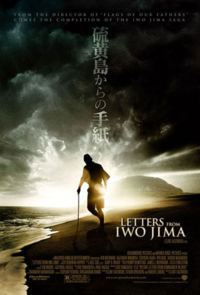 Yesterday I read Ian Buruma's excellent review of Clint Eastwood's new film "Letters from Iwo Jima" in the New York Review of Books. This film, in the Japanese language, has been widely praised by critics, winning the Golden Globe for "Best Foreign Language Film". The passage below in Buruma's review really caught my eye:
"Most war movies have been about heroes, our heroes, and individual differences among the enemies were irrelevant, since their villainy could be taken for granted. In fact, showing individual character, or indeed any recognizable human qualities, would be a hindrance, since it would inject the murderousness of our heroes with a moral ambiguity that we would not wish to see. The whole point of feel-good propaganda is that the enemy has no personality; he is monolithic and thus inhuman."
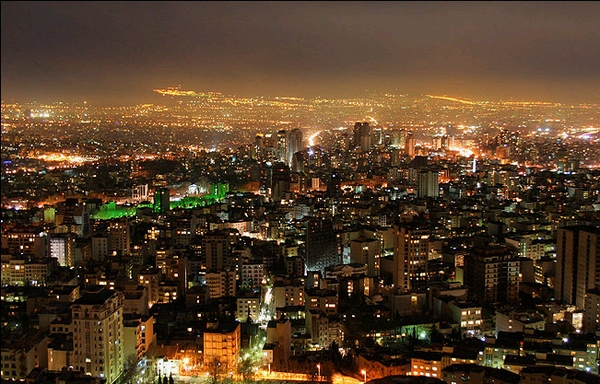 This reminded me of a recent e-mail I had received with a link to an old song by Cat Stevens (Yusuf Islam nowadays) called "Peacetrain". The song is in the background as images of modern day Tehran flash on the screen. These images of everyday life paint a portrait of a people not unlike 'us' as opposed to pictures of an implacably ugly and hostile enemy conjured up by political propaganda. How many people visualize Tehran and its people in this way when they speak of bombings and military action? The message is powerful and surprisingly effective in its simplicity because it subverts the very essence of propaganda, the inhumanity of the 'other'.
Monday, January 22, 2007
Lahore Revisited
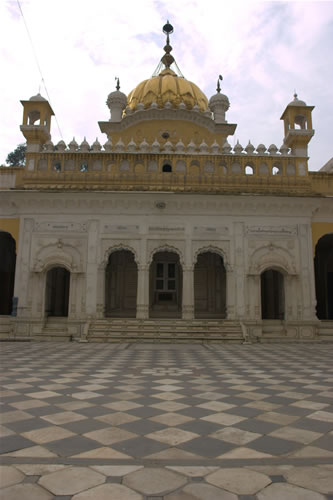 I just returned from a brief trip to Lahore and despite having only a few days there I was able to spend almost a full day inside the enchanting walled city area. I started out at Mori Gate and walked all the way across to Roshnai Gate at the end of Shahi Mohallah Road just past landmarks such as the Mazaar of Hazrat Naugaza Pir and the famous "Phajjay ke Pai" restaurant. Walking through the Roshnai gate I entered the Hazuri Bagh area and past the garden to the entrance of Gurdawara Dera Sahib / Ranjit Singh Smadhi.
The visit to the Gurdawara turned out to be the highlight of my visit. For a long time I have wanted to see this classic Sikh structure but, for reasons unknown, Muslims are not allowed to visit this sacred monument. On a whim I asked a turbaned Sardar standing outside if I could see the Gurdawara. He thought it might be possible and agreed to ask a caretaker. He went inside the complex and returned a few minutes later with an elderly gentleman who after asking me a few questions invited me to come inside. Mr. Harpal Singh was exceptionally kind and gave me a guided tour of the premises, pointing out historic facts about the building. The thing I did not know was that this monument also contains the "Shaheedi Asthan" (the site of martyrdom) of Guru Arjun Dev (the fifth Guru of the Sikhs). Harpal Ji took me to the sacred area where the Guru Granth Sahib is kept and explained the concept of the "Akhand Paath" (the recitation of the entire Granth Sahib in a single setting which can take more than two days). There is an Akhand Paath in the Gurdawara on June 12th, the day of Guru Arjun Dev's martyrdom. Guru Arjun Dev died during the reign of Emperor Jahangir. During his confinement in a prison in the Lahore Fort, the Guru is believed to have vanished into the water miraculously and attained martyrdom after his captors were persuaded to allow him to go bathe in the River Ravi.
After thanking Harpal Ji I walked back into the walled city via Roshnai Gate and winded my way through the streets and alleys all the way to Masjid Wazir Khan inside Delhi Gate passing innumerable shops, bazaars, historic landmarks, shrines, mosques and imambargahs in Mori Gate, Lohari Gate, Shah Alam Bazaar, Mochi Gate and Akbari Mandi. Masjid Wazir Khan is one of the most beautiful and famous mosques in Lahore. It is an oasis of peace set in the midst of crowded bazaars pulsating with constant, loud and hectic commercial activity. In the courtyard of the mosque is the mazaar of the 13th century sufi saint known as Sabz Pir. I sat in the mosque courtyard for a while looking at the delicate decorations on the walls, the surrounding brick buildings overlooking this serene 17th century structure and flocks of pigeons fluttering on the mosque's domes and minarets.
On my way to the walled city I made the essential stop at Kim's; a tiny but wonderful bookstore which is part of the Lahore Museum complex and sits just across from Kim's Gun and Punjab University's Old Campus and adjoins the National College of Arts. I always discover books there that I never find anywhere else in the city. I bought Majid Sheikh's new book called "Lahore: Tales without End" and Som Anand's "Lahore: Portrait of a Lost City". Both books, in very different ways, are treasure troves of vignettes about Lahore and its people. Among dozens of fascinating Lahori tales recounted by Majid Sheikh is the story of the Renault Benz gifted by Adolf Hitler to Allama Mashriqi (founder of the Khaksar Tehreek). This car in a rusted, dilapidated state is still parked in Icchra in the courtyard of Allama Mashriqi's house. Allama's descendants still live in that house.
Sunday, October 01, 2006
Master Madan - Hindustani Music's Child Prodigy
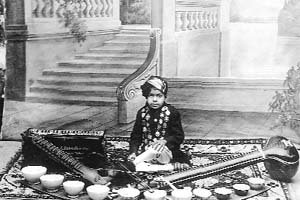 This post owes a direct debt to Bhupinder Singh's recent entry on his blog. It has inspired me to bring together some scattered items about Master Madan.
Since his untimely death as a teenage boy in 1942, Master Madan has had a persistent hold on the imagination of music lovers in the sub-continent. The combination of his virtuosic vocal ability, his hauntingly beautiful voice and the tragedy of such a promising career cut short by premature death have given Master Madan a unique place in the sub-continent's musical memory. The surviving recordings of his music (eight in total) provide music lovers a taste of Master Madan's artistry and give some sense for why he became a phenomenon at such a young age. Bhupinder's piece provides links to two of his best-known recordings. The poet is Sagar Nizami and the music is by Master Amarnath (elder brother of the filmi duo Husanlal-Bhagatram).
The six other pieces of Master Madan's extant work were introduced by journalist Khalid Hasan in his article in Dawn entitled "The boy with the golden voice" on December 31, 2001. This article also has a great biographical sketch detailing his family background, musical influences and the sad circumstances of his death. The six forgotten recordings were discovered by Khalid Hasan's musicologist friend M. Rafiq. An essay by Pran Neville on Master Madan was published today in India's Sunday Tribune and includes a rare photograph of Master Madan (above and on Bhupinder's post). A lot of the facts in this essay are the same as the Khalid Hasan article but there are a few new interesting details.
I have listened to all six of these recently discovered recordings on the website Thumri.com . Sadly, for quite some time now the links to these recordings on that website no longer work and I hope they will be fixed so we can enjoy these wonderful pieces of music on the internet. More importantly, these recordings should be published so they can get wider circulation. These six pieces include two Punjabi songs; "Ravi de parle kande ve mitra vasda hai dil da chor" and "Baghaan vich peeNgaN PaiyaN". The other four recordings are "Gori gori baiyaaN" and the three bhajans, "Mori binati maano kanha re", "Chetna hai to chet lai" and "Mana ki mana hi maan rahi". The last bhajan (which the website conjectures is in Raag Soraath) is my favorite and is a beautifully melodious piece sung with devotional intensity.
Update: On a recent search on YouTube I found two of Master Madan's ghazals that have been posted by "Rajan". The first ghazal is titled "YuN na reh reh kar HameiN" and the second is "Hairat se tak raha hai jahan-e-wafa mujhe" (title of the second video on YouTube incorrectly has the word "zamana" instead of "jahan-e-wafa"). Enjoy:
YuN na reh reh kar HameiN:
Hairat se tak raha hai jahan-e-wafa mujhe:
Update II: I discovered all known eight songs of Master Madan on this site maintained by Mr. Surjit Singh.
Saturday, September 30, 2006
On the Shortness of Life
 In mid June this year I drove up with my family for a short vacation to picturesque Lake Tahoe on the border of California and Nevada. As is my habit when I visit a new place, I started to investigate if there was a decent bookstore near where we were staying in South Lake Tahoe. After some discouraging conversations with people at the hotel, who seemed to believe Lake Tahoe was devoid of booksellers, I finally located "Neighbors Books & Music" on Lake Tahoe Boulevard.
Browsing in the store I came across a slim paperback volume of three essays by the Roman statesman Seneca (4 BC - 65 AD). The first essay in the book is titled "On the shortness of life" and as I read the first essay in the serene environment of Lake Tahoe I was mesmerized. The essay is addressed to Seneca's friend Paulinus, who the essay seems to suggest is a successful public official. Seneca's Stoic philosophy emphasizes the need for men to face the fact of their own mortality and to prepare for death, to treat time as the most precious and irreplaceable commodity and to use this limited resource for reflection and understanding not frivolous pursuits. What amazed me was the incredible relevance of this ancient essay to modern man's existence. Here are a few passages:
"Can anything be more idiotic than certain people who boast of their foresight? They keep themselves officiously preoccupied in order to improve their lives; they spend their lives in organizing their lives. They direct their purposes with an eye to a distant future. But putting things off is the biggest waste of life: it snatches away each day as it comes, and denies us the present by promising the future. The greatest obstacle to living is expectancy, which hangs upon tomorrow and loses today. You are arranging what lies in Fortune's control, and abandoning what lies in yours." (Pg. 13)Seneca is bitingly sarcastic about those who seem to have primarily desired, strived for and attained prosperity.
"All the greatest blessings create anxiety, and Fortune is never less to be trusted than when it is fairest. To preserve prosperity we need other prosperity, and to support the prayers that have turned out well we have to make other prayers ... So it is inevitable that life will be not just very short but very miserable for those who acquire by great toil what they must keep by greater toil ... New preoccupations take the place of old, hope excites more hope and ambition more ambition. They do not look for an end to their misery, but simply change the reason for it." (Pg. 28)
"You must retire to these pursuits which are quieter, safer and more important ... In this kind of life you will find much that is worth your study: the love and practice of the virtues, forgetfulness of the passions, the knowledge of how to live and die, and a life of deep tranquility." (Pg. 31)Earlier today I was reminded of Seneca's essay as I was reading a poem called "Next, Please" by the British poet Philip Larkin (1922 - 1985). Larkin, too bemoans our tendency to always look to the future, waiting for our proverbial ship to come in. However, unlike Seneca's essay, Larkin's poem is not a plea for the pursuit of virtue. His poem is just an image of stark realism where the essential truth of human life is only death.
Next, Please
Always too eager for the future, we
Pick up bad habits of expectancy.
Something is always approaching; every day
Till then we say,
Watching from a bluff the tiny, clear,
Sparkling armada of promises draw near.
How slow they are! and how much time they waste,
Refusing to make haste!
Yet they leave us holding wretched stalks
of disppointment, for, though nothing balks
Each big approach, leaning with brasswork prinked,
Each rope distinct,
Flagged, and the figurehead with golden tits
Arching our way, it never anchors; it's
No sooner present than it turns to past.
Right to the last
We think each one will heave to and unload
All good into our lives, all we are owed
For waiting so devoutly and so long.
But we are wrong:
Only one ship is seeking us, a black-
Sailed unfamiliar, towing at her back
A huge and birdless silence. In her wake
No waters breed or break.
Tuesday, September 05, 2006
Majeed Amjad - The Poet Less Remembered
Inspired by my friend Raza's literary blog Jahane-e-Rumi , I have been meaning to post something on Urdu poets and poetry. In the post-Iqbal era of Urdu poetry there are few greater poets than Majeed Amjad (this is a link to a short bio of him in Wikipedia that I wrote and I would love readers familiar with his work to add to it). Even amongst the lovers of Urdu poetry his name is least likely to be recognized. Reading Majeed Amjad's magnificent poetry I have often wondered how it is that some literary reputations get created from meager contributions but some people forever struggle to gain just acclaim.
In Majeed Amjad's case I think it was a confluence of factors: he was a quiet, reserved introvert with no inclination for self-marketing. He lived away from the literary center of Lahore in small Punjabi towns like Sahiwal and Jhang and never had many influential advocates of his literary merits. But, perhaps more importantly, Majeed Amjad was not an ideological poet affiliated with one or the other group of literary luminaries who could beat their partisan drums on his behalf (Progressive Writers Movement managed to turn everyone who knew the words 'mazdoor' or 'kisan' into literary giants).
However, on to some examples of his wonderful poetry (unfortunately I do not possess any talent for translation so my apologies to those who struggle with literary Urdu).
"Shab-e-Rafta" was the only collection of his poetry published in his lifetime. He wrote a beautiful poem ("Harf-e-Awwal") as an introduction to that collection:
DardoN ke is koh-e-garaaN se
MeiN ne tarashi, nazm kay eewaN
ki ik ik sil,
Ik ik soch ki hairaaN moorat ...
Garche qalam ki nok se tapke
Kitne tarane, kitne fasane
Lakh masaail
Dil meiN rahi sub dil ki hikayat!
Bees baras ki kaawish-e-paiham
Sochte din aur jaagti raateiN
Un ka haasil:
Aik yahi izhaar ki hasrat!
The persistent undercurrent of Majeed Amjad's poetry is a view of life that is essentially tragic (perhaps another reason why it is difficult for the young to embrace him compared to say Faiz's optimistic theme of 'we shall overcome') . Majeed Amjad feels the inexorable cruelty of time in his bones. Life's circle continues with unremitting regularity indifferent to what it leaves behind.
In the poem "KunwaN", the water wheel symbolizes the perpetual circle of time and the water carrier, symbolizing the divine, watches this passing of time and its ravages with complete detachment:
KunwaN chal raha hai! magar khet sookhe pare haiN, na fasleiN, na khirman, na dana
Na shakhon ki bahein, na phooloN ke mukhre, na kalioN ke mathe, na rut ki jawani ...
KunwaiN wala, gaadi pe leta hai, mast apni bansi ki meethi sureeli sada meiN
KahiN khet sookha para reh gaya aur na us tak kabhi aai pani ki bari
KahiN beh gayi aik hi tund rele ki fayyaz lehroN meiN kayari ki kayari ...
Aur ik naghma sarmadi kaan meiN aa raha hai, musalsal kunwaN chal raha hai
Payape magar narm rau us ki raftaar, paiham magar betakan us ki gardish
Adam se azal tak, azal se abad tak badalti nahiN aik aan us ki gardish
Na jane liye apne dolaab ki aastinoN maiN kitne jahaaN us ki gardish
RawaN hai rawaN hai
TipaN hai tipaN hai
Yeh chakkar yuhiN jaawidaN chal raha hai
KunwaN chal raha hai
I could go on but the last poem that I would like to quote in this piece is "Maqbara-e-Jahangir". I was particularly reminded of this reading the poem Raza has posted on his blog with an allusion to Shalimar. Notice the wholly different tone of Majeed Amjad's poem. His reaction to this beautifully historic sight is a deep sadness as he sees human beings (gardeners, people picknicking etc.) in this serene setting either struggling to get through the day or wholly oblivious to this fleeting existence.
Khurdre, maile, phate kaproN meiN boorhe maali
Yeh chaman band, jo guzre hue sultanoN ki
HaddiaN seench ke phulwariaN mehkate haiN
Ghaas kat ti hai ke din in ke kate jate haiN ...
Teen sau saal se mabhoot khare haiN jo yeh sarv
In ki shakheiN haiN keh afaaq ke sheeraze haiN
Saf-e-ayyam ki bikhri hui tarteebeN haiN
In ke saaye haiN keh dhalti hui tehzeebeN haiN ...
MarmareeN qabr ke ander, tahe zulmaat kahiN
Kirmak-o-Moor ke jabroN meiN salateeN ke badan
Koi dekhe, koi samjhe to is eewaN meiN jahaaN
Noor hai, husn hai, taz'een hai, zeebaish hai
Hai to bus aik dukhi rooh ki gunjaish hai
Update: (December 15th, 2009)
An extremely rare recording of Majeed Amjad reciting his own poetry. This is recorded at the residence of Mr. Mazhar Tirmazi in Farid Town, Sahiwal on November 13th, 1973.
In Majeed Amjad's case I think it was a confluence of factors: he was a quiet, reserved introvert with no inclination for self-marketing. He lived away from the literary center of Lahore in small Punjabi towns like Sahiwal and Jhang and never had many influential advocates of his literary merits. But, perhaps more importantly, Majeed Amjad was not an ideological poet affiliated with one or the other group of literary luminaries who could beat their partisan drums on his behalf (Progressive Writers Movement managed to turn everyone who knew the words 'mazdoor' or 'kisan' into literary giants).
However, on to some examples of his wonderful poetry (unfortunately I do not possess any talent for translation so my apologies to those who struggle with literary Urdu).
"Shab-e-Rafta" was the only collection of his poetry published in his lifetime. He wrote a beautiful poem ("Harf-e-Awwal") as an introduction to that collection:
DardoN ke is koh-e-garaaN se
MeiN ne tarashi, nazm kay eewaN
ki ik ik sil,
Ik ik soch ki hairaaN moorat ...
Garche qalam ki nok se tapke
Kitne tarane, kitne fasane
Lakh masaail
Dil meiN rahi sub dil ki hikayat!
Bees baras ki kaawish-e-paiham
Sochte din aur jaagti raateiN
Un ka haasil:
Aik yahi izhaar ki hasrat!
The persistent undercurrent of Majeed Amjad's poetry is a view of life that is essentially tragic (perhaps another reason why it is difficult for the young to embrace him compared to say Faiz's optimistic theme of 'we shall overcome') . Majeed Amjad feels the inexorable cruelty of time in his bones. Life's circle continues with unremitting regularity indifferent to what it leaves behind.
In the poem "KunwaN", the water wheel symbolizes the perpetual circle of time and the water carrier, symbolizing the divine, watches this passing of time and its ravages with complete detachment:
KunwaN chal raha hai! magar khet sookhe pare haiN, na fasleiN, na khirman, na dana
Na shakhon ki bahein, na phooloN ke mukhre, na kalioN ke mathe, na rut ki jawani ...
KunwaiN wala, gaadi pe leta hai, mast apni bansi ki meethi sureeli sada meiN
KahiN khet sookha para reh gaya aur na us tak kabhi aai pani ki bari
KahiN beh gayi aik hi tund rele ki fayyaz lehroN meiN kayari ki kayari ...
Aur ik naghma sarmadi kaan meiN aa raha hai, musalsal kunwaN chal raha hai
Payape magar narm rau us ki raftaar, paiham magar betakan us ki gardish
Adam se azal tak, azal se abad tak badalti nahiN aik aan us ki gardish
Na jane liye apne dolaab ki aastinoN maiN kitne jahaaN us ki gardish
RawaN hai rawaN hai
TipaN hai tipaN hai
Yeh chakkar yuhiN jaawidaN chal raha hai
KunwaN chal raha hai
I could go on but the last poem that I would like to quote in this piece is "Maqbara-e-Jahangir". I was particularly reminded of this reading the poem Raza has posted on his blog with an allusion to Shalimar. Notice the wholly different tone of Majeed Amjad's poem. His reaction to this beautifully historic sight is a deep sadness as he sees human beings (gardeners, people picknicking etc.) in this serene setting either struggling to get through the day or wholly oblivious to this fleeting existence.
Khurdre, maile, phate kaproN meiN boorhe maali
Yeh chaman band, jo guzre hue sultanoN ki
HaddiaN seench ke phulwariaN mehkate haiN
Ghaas kat ti hai ke din in ke kate jate haiN ...
Teen sau saal se mabhoot khare haiN jo yeh sarv
In ki shakheiN haiN keh afaaq ke sheeraze haiN
Saf-e-ayyam ki bikhri hui tarteebeN haiN
In ke saaye haiN keh dhalti hui tehzeebeN haiN ...
MarmareeN qabr ke ander, tahe zulmaat kahiN
Kirmak-o-Moor ke jabroN meiN salateeN ke badan
Koi dekhe, koi samjhe to is eewaN meiN jahaaN
Noor hai, husn hai, taz'een hai, zeebaish hai
Hai to bus aik dukhi rooh ki gunjaish hai
Update: (December 15th, 2009)
An extremely rare recording of Majeed Amjad reciting his own poetry. This is recorded at the residence of Mr. Mazhar Tirmazi in Farid Town, Sahiwal on November 13th, 1973.
Thursday, July 06, 2006
Garrison Keillor - The Man from Lake Wobegon
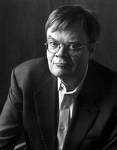 I have been a fan of Garrison Keillor's radio show, The Prairie Home Companion, for several years now but I have never been able to pinpoint the show's precise charm. Somehow a wonderful broadcast is created by the combination of Keillor's soothing, pitch perfect radio voice, the melodious, pastoral folk music and the show's general atmosphere which transports the audience to a time, place and rhythm of life that the frenzied modern soul yearns for. This magical atmosphere is given concrete shape by Keillor's unendingingly fascinating, everyday vignettes of his midwestern "hometown" of Lake Wobegon; the town where "all the women are strong, all the men are good looking and all the children are above-average".
Sam Anderson wrote a wonderfully insightful piece about Garrison Keillor not so long ago that is a must read for afficionados.
Tuesday, July 04, 2006
Imran Khan - Ever the Lone Ranger
 Interesting interview with Imran Khan in the Sunday Observer. The piece captures Imran's essential persona; fiercely independent, consistently principled and completely committed but a little self-righteous and indeed somewhat politically naive.
It has to be said that, despite his muddle-headed 'spirituality' that sometimes brings him close to despicable elements like the Jamaat-e-Islami, his ideas for Pakistan's political system are fundamentally sound. He is most insistent on an independent judiciary, election commission and accountability bureau; all institutions whose strengthening is critical for Pakistan's democratic advancement. Despite his early support for Musharraf, he is now vehemently opposed to military's role in government. In Pakistan, there is almost no disagreement in thinking circles now that as long as military remains the dominant force on the Pakistani political scene, democracy has little chance of taking root.
Imran's instincts in the arena of foreign policy are reflexively anti-western and many times flawed. Of course, there is plenty wrong with Musharraf's self-preserving genuflection to the West and a harder Pakistani line toward the west if it is in its national interest (such as free trade agreements, opposition to the roughshod execution of the 'war on terror' etc.) is entirely appropriate. However, Imran's public utterances extolling local virtues and criticisms of 'kala sahibs' seem to me a raw reflection of his personal evolution from a playboy to a politician and not any well thought out views about the virtuous life or a hard-headed understanding of foreign policy goals and objectives.
Monday, July 03, 2006
Physics - The Wait for a Breakthrough
Interesting essay in the NY Times by Dennis Overbye. The essay expresses the angst that despite many steps forward over the centuries culminating in the Standard Model (that nailed the relationship between strong, weak and electromagnetic forces), physics is stuck since the 1970's. Physicists still cannot explain some of the most basic quandaries about the universe.
Excerpt:
Excerpt:
In words that still haunt me, Lee Smolin, a physicist at the Perimeter Institute for Theoretical Physics in Ontario, once wrote, "When a child asks, What is the world, we literally have nothing to tell her."
My own daughter, Mira, just turned 4 and she is not asking me what the world is made of, quite yet. I've managed to keep ahead of her so far, if only by reading a page ahead in the dinosaur books that occupy bedtime, but the time is coming when she will be calling me and the world's physicists to account.
Subscribe to:
Posts (Atom)